
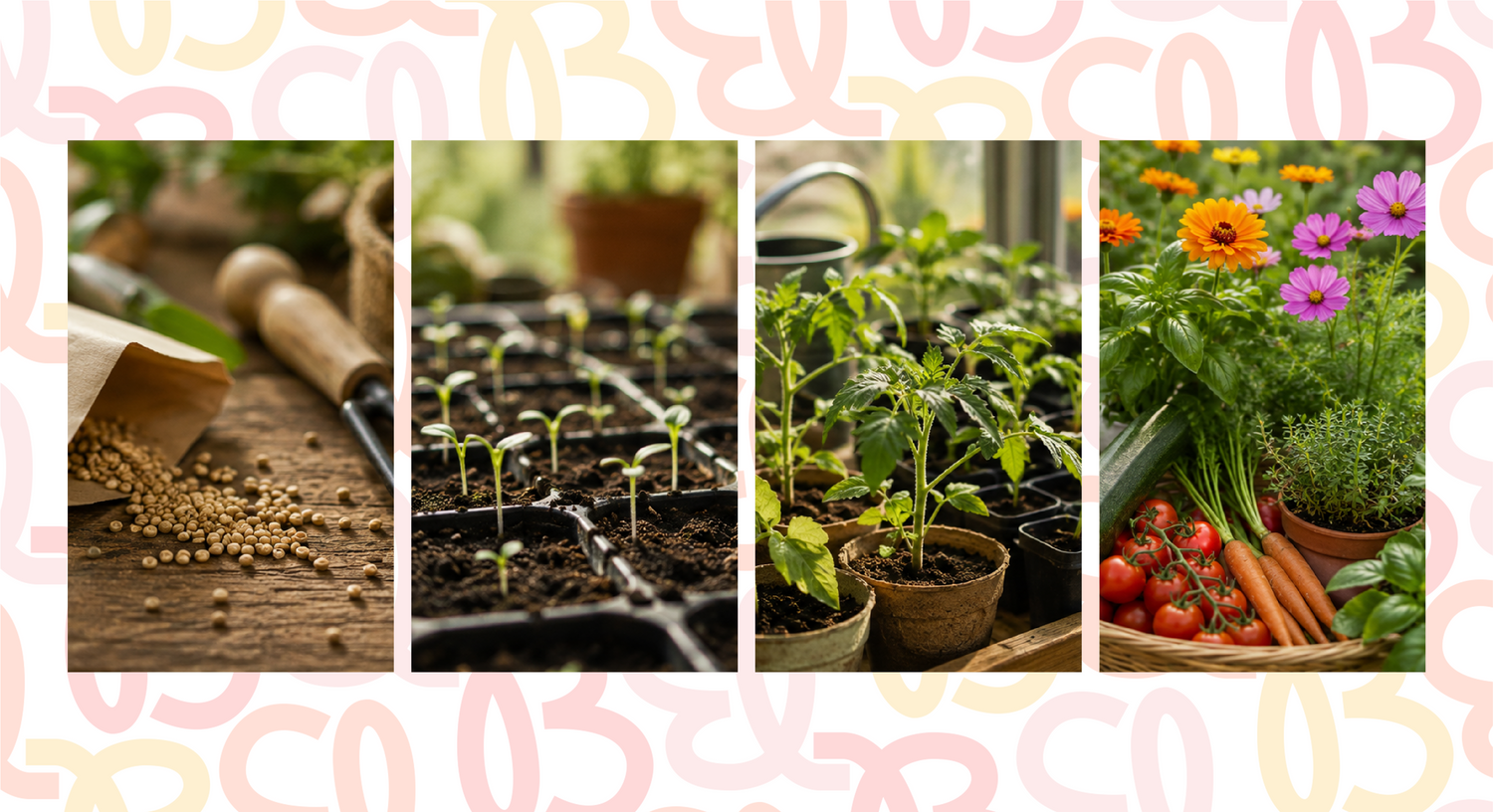
What to sow indoors, what to sow direct, and what to plant out each month.
A Growing Adventure Starts Here
A seed is a fascinating thing. Inside that tiny, dry shell is everything required to become a sunflower taller than your head, a tomato bursting with summer flavour, or a handful of fresh herbs for your dinner.
At Bees Seeds, we believe growing should be a joy, not a chore. Whether you have a sprawling back garden, a small balcony, or just a sunny windowsill, this calendar is for you.
Use this guide as a year-round companion. Think of it as a friendly nudge to get your seeds in the soil. Follow along, celebrate every green shoot, and remember that even the most seasoned gardener started exactly where you are now.
A quick note on timing: The UK is a large place. The south of England warms up several weeks earlier than Scotland or the north of England. Use this calendar as a general guide, but always keep an eye on your local forecast, particularly around the last frost dates in spring.
A note on succession sowing: Many seeds — particularly salad leaves, annual herbs, carrots, radishes and spring onions — appear across several months. This is intentional. Sowing a small amount every two to three weeks ensures a constant harvest rather than a glut followed by nothing.
The Monthly Sowing Calendar
January: The Quiet Before the Green
January often feels like the garden is sleeping. However, it is the perfect time for ambitious gardeners to get a head start indoors.
- What to sow indoors: Chilli peppers, aubergines, onions in modules, hardy salad leaves and oriental greens.
- What to sow direct: Nothing. The soil is too cold and wet.
- What to plant out: Nothing. Focus on planning and ordering seeds.
Bees Seeds Tip: If you do not have a heated propagator, January is a great time to organise your seed trays, compost and pots.
February: The First Stirrings
The days are getting longer, and the garden is waking up. You can start a good range of crops indoors.
- What to sow indoors: Tomatoes, peppers, chilli peppers, aubergines, broad beans, round-seeded peas, onions and salad leaves.
- What to sow direct: In the mildest parts of the south, broad beans may be sown under a cloche.
- What to plant out: Nothing. Protect all seedlings from frost.
Bees Seeds Tip: Tomatoes sown in late February will be strong, well-established plants by May. Avoid sowing too early if you lack good light.
March: The Season Begins
March is a turning point. The soil starts to warm, the light is returning, and the gardening year begins in earnest.
- What to sow indoors: Tomatoes, peppers, aubergines, celery, celeriac, leeks, brassicas, peas, broad beans and hardy annuals.
- What to sow direct: Carrots, first early potatoes, beetroot, parsnips, spinach, chard, rocket, radishes, spring onions, coriander and parsley.
- What to plant out: Onion sets, overwintered broad beans, hardy lettuce and brassica plugs.
Bees Seeds Tip: Keep fleece or a cloche handy to protect tender outdoor sowings on cold nights.
April: Full Speed Ahead
The garden is waking up fast, seedlings are appearing, and the first outdoor plantings of the year begin.
- What to sow indoors: Courgettes, summer squash, melons, cucumbers, French beans, runner beans, sweetcorn, basil and tender annual flowers.
- What to sow direct: Carrots, beetroot, parsnips, turnips, peas, mangetout, salad leaves, spring onions, radishes, kale, brassicas, herbs and hardy annual flowers.
- What to plant out: Brassica seedlings, onion sets, leek seedlings, lettuce and hardy annual flower plugs.
Bees Seeds Tip: Keep up your succession sowing routine for salad leaves, radishes and annual herbs.
May: Planting Out Season
May is one of the most exciting months. The last frosts are generally behind us, and it is time to move indoor-raised seedlings into the garden.
- What to sow indoors: Cucumbers, melons, final sowings of courgettes and squash, basil, French beans and runner beans.
- What to sow direct: French beans, runner beans, sweetcorn, courgettes, squash, maincrop potatoes, beetroot, carrots, turnips, swedes, salad leaves, herbs, peas, mangetout, spring onions and radishes.
- What to plant out: Tomatoes, courgettes, squash, sweetcorn, brassicas, beans and annual flowers.
Bees Seeds Tip: Before planting out, harden off your seedlings for a week by placing them outside during the day and bringing them in at night.
June: Summer Sowing
The garden is at its most productive. June is the time to keep succession sowings going and start thinking about autumn harvests.
- What to sow indoors: Basil.
- What to sow direct: French beans, runner beans, carrots, turnips, swedes, salad leaves, oriental greens, coriander, dill, parsley, fennel, sweetcorn and Swiss chard.
- What to plant out: Tomatoes, peppers, cucumbers, courgettes, squash and brassicas for autumn.
Bees Seeds Tip: If you want fresh lettuce for autumn, June is a great time to start. Choose heat-tolerant varieties to help prevent bolting.
July: Mid-Summer Growing
Do not be tempted to stop sowing now. July is vital for keeping harvests going through the year.
- What to sow direct: French beans, carrots, turnips, swedes, winter radishes, Swiss chard, salad leaves, oriental greens, spring cabbage, spring onions, fennel, kale, broccoli, coriander, dill and parsley.
- What to plant out: Leeks and brassicas for winter and spring.
Bees Seeds Tip: Choose bolt-resistant varieties for brassicas sown now, especially broccoli and spring cabbage.
August: Preparing for Autumn
August is for looking ahead. While you are busy harvesting, sow for autumn, winter and the following spring.
- What to sow direct: Winter salad leaves, oriental greens, spring onions, turnips, swedes, rocket, endive, chicory, kale, spinach, radishes, coriander and parsley.
- What to plant out: Leeks, spring cabbage, kale and winter brassicas.
Bees Seeds Tip: Every cleared bed is an opportunity to sow something new or mulch the area to rest it for spring.
September: The Season Turns
September has warm days and cool nights. There is still plenty to sow for an extended harvest.
- What to sow direct: Winter salads, oriental greens, rocket, spinach, spring onions, broad beans, hardy round-seeded peas, garlic, coriander and parsley under cover.
- What to plant out: Spring cabbages, winter brassicas and strawberry runners.
Bees Seeds Tip: Autumn-sown broad beans and garlic overwinter well and will be among the first crops to reward you in spring.
October: Wrapping Up
The growing season is winding down, but the garden is far from finished.
- What to sow direct: Garlic, overwintering onion sets, broad beans, hardy round-seeded peas and winter salad leaves under cloches.
- What to plant out: Spring bulbs and garlic.
Bees Seeds Tip: Planting garlic in October is a simple pleasure. Tuck the cloves in and wait for a fantastic harvest next year.
November: Rest and Reflect
November is the quietest month. The garden deserves a rest, and so do you.
- What to sow indoors: Chillies in a heated propagator at the very end of the month.
- What to plant out: Bare-root trees, shrubs, hedging, garlic and tulip bulbs.
Bees Seeds Tip: Use November to write your seed wishlist and clean your trays and pots ready for next year.
December: Seed Dreaming
December is for planning. Curl up with a seed catalogue and map out your year ahead.
- What to sow indoors: Chilli peppers at the end of the month.
- What to plant out: Bare-root trees, roses and hedging, weather permitting.
Bees Seeds Tip: A seed collection makes a great gift — a promise of everything still to come.
The Bees Seeds Difference
Since 1905, we have been helping people grow. While gardening trends change, our belief in the joy of growing remains constant.
- Curated seed collections: We select seeds that thrive in the UK climate, whether you are a total beginner or a seasoned gardener.
- Seed gift sets: Our gift collections for all ages are designed to inspire.
- Small space solutions: You do not need a massive plot to grow food. Many seeds are suited to containers, windowsills and balconies.
- A community of growers: Through our blog, guides and community, we are building a movement of people who believe that growing things is good for the soul.
Every Seed Is a Small Act of Hope
Gardeners are optimistic people. Every seed you sow is an investment in a future where that tiny thing becomes something beautiful or delicious.
You do not need to be an expert or have a perfect garden. You just need a seed, some compost, water and the willingness to watch and wait.
When that first green shoot appears, you will understand why people do this year after year. It is about the whole journey — the planning, the sowing, the nurturing and the harvest.
We are with you every step of the way.
Happy growing,
The Bees Seeds Team 🐝